

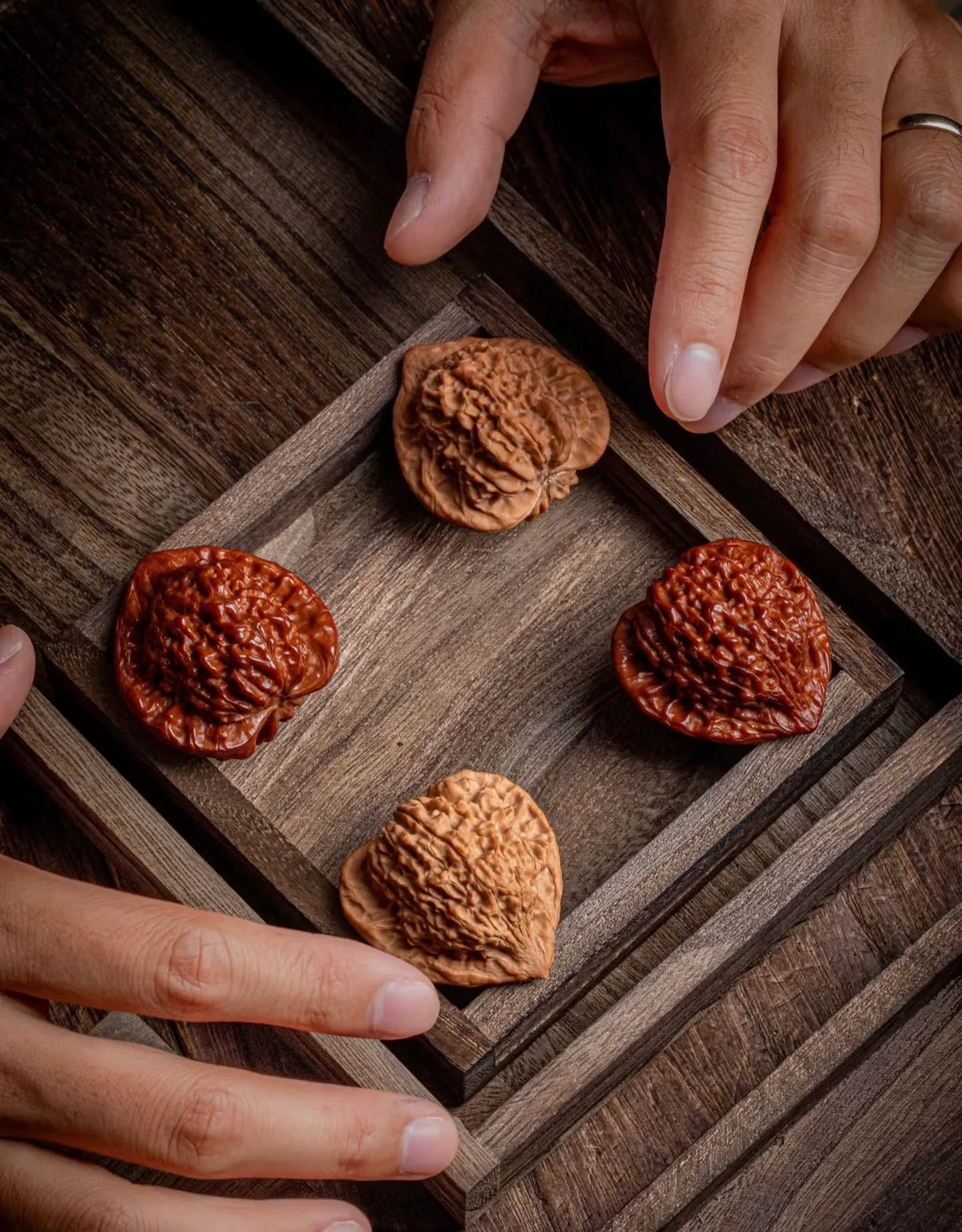
Four walnuts with different appearances. This is not a before-and-after sequence.
A 100-day wenwan walnut journal is a way to observe a pair over time. It is not a promise that the shells will become a particular color or finish by day 100. The value comes from making a record you can trust: the same pair, comparable photographs, and notes about what actually happened.
You can begin privately with a phone and a small notebook. You do not need a public account, a perfect daily streak, or a dramatic before-and-after image. Here is a practical format you can adapt.
Make a useful day-zero record
Photograph both walnuts before beginning your routine. Include a view of their faces, a side view, and the bases. Look for distinct ridges or marks that will help you recognize each piece later.
Give the pair a simple label, such as “Pair A,” and note the purchase date, known measurements, and any disclosed treatments. If the pair has already been handled, write that down. Day zero means the beginning of your record, not necessarily the beginning of the walnuts’ history.
Choose a repeatable photo setup
Use the same background and place the pair in the same positions each time. Mark where your phone and the walnuts sit so the angle and distance are easy to repeat. Keep the camera lens clean.
Choose lighting you can reproduce. A dedicated lamp may be easier to repeat than a window that changes with the weather. Avoid mixing different light sources between sessions. If your camera allows it, keep exposure and white balance consistent; otherwise, record that automatic settings were used.
Keep editing out of the comparison
Save the original images. Do not increase warmth, saturation, contrast, or shine to make progress more visible. If you crop an image, use comparable framing for the other dates and keep the uncropped original.
A small neutral reference card in each frame can help you notice a lighting change, but it does not turn a phone photograph into a laboratory measurement. If two sessions look inconsistent, say so. A repeat photograph is more useful than a confident conclusion from mismatched images.
Pick a schedule you can maintain
One workable schedule is day 0, 7, 14, 30, 60, and 100. These are suggested checkpoints for your journal, not milestones the pair is supposed to achieve. Add photographs whenever you notice something worth recording.
Miss a checkpoint? Photograph the pair when you return and label the actual date. Do not backdate an image or substitute a different pair to keep the sequence tidy. An imperfect record can still be an honest one.
Write down actions and observations separately
Use two short columns. Under actions, record what you did: handled the pair, brushed away loose dust, stored it, or took a break. If you estimate handling time, mark it as an estimate rather than inventing precision.
Under observations, record what you noticed: a familiar grip, a more comfortable movement, a possible change in sheen, or no visible difference. Separating these columns makes it harder to turn a guess about cause into a fact.
- Date and journal day: the actual day you made the entry.
- Handling: what you did and any approximate time.
- Care: brushing or other actions, including unexpected exposure.
- Photo setup: anything that differed from the usual arrangement.
- Observation: what you can see or feel, including uncertainty.
Compare more than color
At each checkpoint, look at the same features on each walnut. Consider sheen, how clearly you can recognize individual ridges, and how the pair feels to hold. Keep personal impressions distinct from visible evidence.
You may discover that the biggest change is your familiarity with the pair. You may also see very little difference in the photographs. Both belong in the journal. Avoid ranking your result against someone else’s shells, routine, or camera setup.
Share the whole story
If you post your journal, identify the dates, pair, and any treatments. Disclose if the pair was gifted or the post is paid. Include missed days and subtle results instead of selecting only the most dramatic frames.
Do not treat a single person’s record as proof of what every pair will do. A shared project becomes more interesting when different outcomes remain visible.
A future season at Orbit Nuts
We are planning The 100-Day Project, a future season built around documenting real walnut pairs over a shared period. Dates and participation details have not been announced. This journal can stand on its own while that plan takes shape.
For a comfortable start, read How to Begin and the Care guide. A little time, in your hands.
Keep the movement comfortable
Record breaks and small adjustments as part of the journal. The beginner rolling guide covers slipping, clacking and resetting without forcing a faster pace. A useful record follows what actually happened with your pair.