

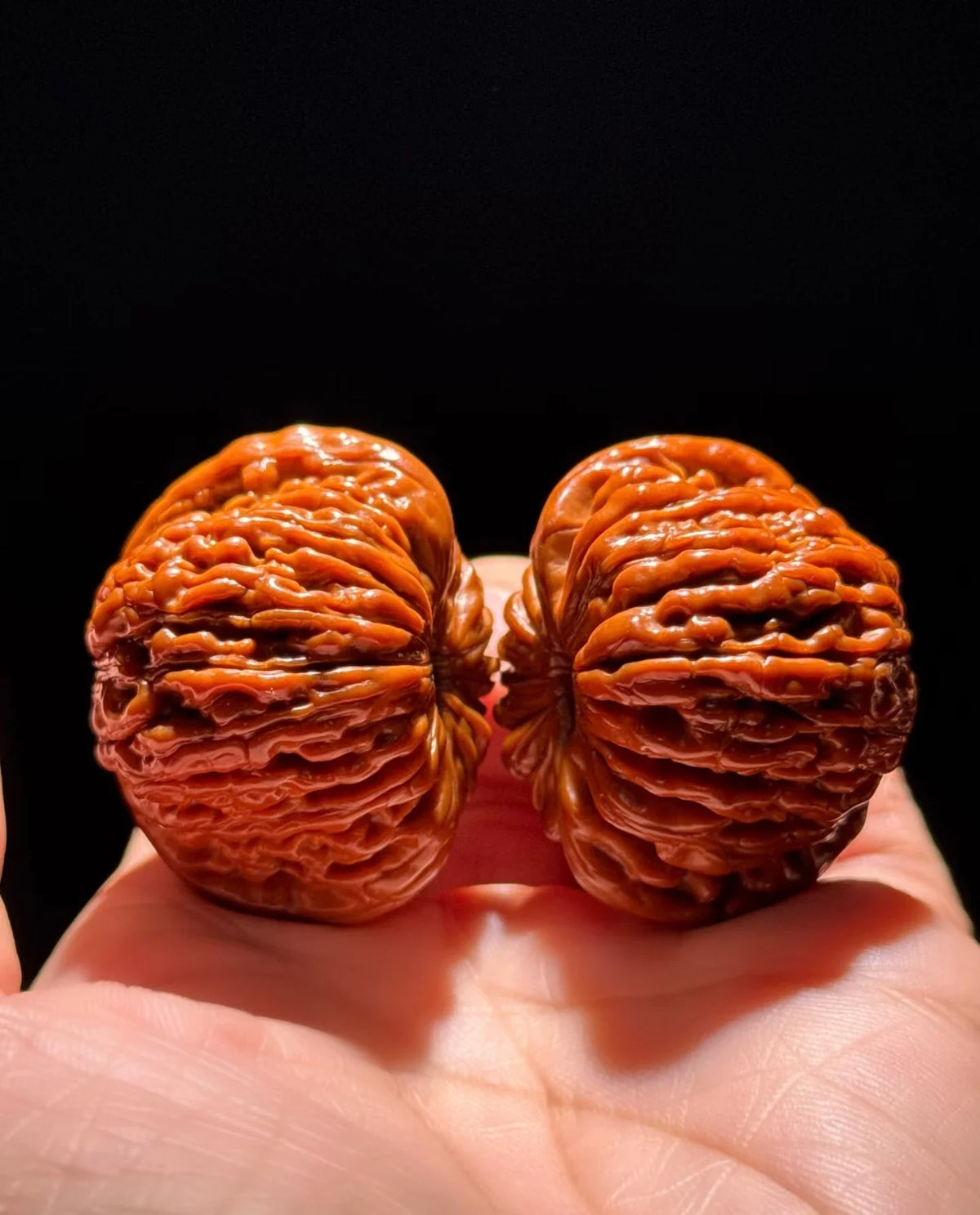
An in-hand view provides context; measurements are still needed to assess size.
Choosing wenwan walnut size online is a problem of translating a listing into a feeling. You can see a pair and read a measurement, but you cannot yet tell how easily your fingers will move around it. The most useful approach combines dimensions, shape, and the kind of hand-play you want to try.
There is no universal size that makes someone a proper beginner or collector. Aim for a comfortable pair with understandable product information. Bigger is not automatically better, and a neat hand-size chart cannot account for every shell shape or preference.
Find out what the number measures
When a listing says “40 mm,” ask which direction that describes. Is it the greatest width, the height from base to tip, or another measurement? A walnut is not a perfect sphere, so one number cannot tell you everything about its proportions.
Ask for width, height, and depth for each walnut when possible. A photograph with a ruler or calipers can clarify the measurement, provided the tool’s position and markings are visible. Use those details to compare like with like across listings.
Shape changes the feeling of size
Imagine two objects with the same maximum width. One is low and rounded; the other is taller with a prominent tip. They can occupy your palm differently even though the headline measurement matches.
Ridges matter as well. A pronounced edge may feel more noticeable than a rounded contour. Look at side views, top views, and the base, not just the most attractive angle. If the texture looks sharp or dense, ask for a close view before deciding whether it matches your preferences.
Choose a movement before choosing a size
Do you want to turn two walnuts within one hand, explore a single walnut with your fingertips, or alternate between both? Two-object rotation asks something different from simply holding a textured object.
For your first pair, favor a movement you can make without squeezing hard, stretching your fingers awkwardly, or rushing to prevent a drop. If you can try pairs in person, move slowly above a soft surface and compare them directly. Comfort is more useful feedback than completing an impressive motion.
Use a reference object carefully
If you already own a tactile object that feels comfortable, measure it and note its shape. That gives you a starting reference to discuss with a seller. If you have two similar objects, you can also notice how much space they occupy together in your palm.
This is a rough comparison, not a fit test. A smooth object and a ridged walnut of similar width will not feel identical. Avoid ordering solely because a pair shares a number with something you already own.
Read in-hand photographs as context
A hand in a product image offers visual context, but you do not know the person’s hand dimensions, camera distance, or exact grip. Perspective can make the same pair look smaller or larger.
Use an in-hand photo alongside measurements and close views. If a listing provides only a dramatic close-up, request the missing details. You should not have to guess whether you are buying a compact pair or one that needs more room to move.
Separate matching from personal fit
A closely matched pair may look balanced in size, shape, and pattern. That is a different question from whether it fits your hand. An attractive match can still feel awkward if the pair is too bulky for the movement you prefer.
Likewise, natural variation does not automatically make a pair unusable. Look at both walnuts, understand the differences, and decide what matters to you. For a first purchase, clear condition information and comfortable handling are sensible priorities.
A short checklist to send a seller
- What are the width, height, and depth of each walnut?
- Which measurement is used as the advertised size?
- Can I see both walnuts from several angles?
- Do these photographs show the actual pair I will receive?
- Are there any cracks, repairs, or added surface treatments?
Keep the answers with your order details. They give you something concrete to compare with the pair when it arrives and help you make more informed choices if your preferences change later.
Let the first pair teach you something
You do not need to predict your permanent favorite size. Start within a budget you are comfortable with and pay attention to what you learn: which contours you enjoy, how you hold the pair, and when a movement feels forced.
Browse First Pairs with these questions in mind. Once a pair arrives, follow How to Begin and keep a few notes. Our walnut journal guide can help you record that experience alongside any visible changes.
Put the measurements into a purchase decision
Once you have a useful size reference, check whether the seller is measuring your exact pair or giving a range for random selection. Our online buying checklist covers that distinction alongside condition and treatments. If you are comparing a walnut measurement with a ball you already own, read the Baoding comparison before assuming the fit will be the same.